

Melasma is a chronic pigment disorder, not a one-time stain. Most Karachi patients who say their melasma “came back” did clear it once, then lost it to sun, heat, hormones or a stopped routine. This guide explains why relapse happens in Karachi specifically, which treatments work on South Asian skin, what they cost, and the maintenance plan our dermatologists use to keep patches from returning.
What Melasma Is and Why It Behaves Differently From Ordinary Pigmentation
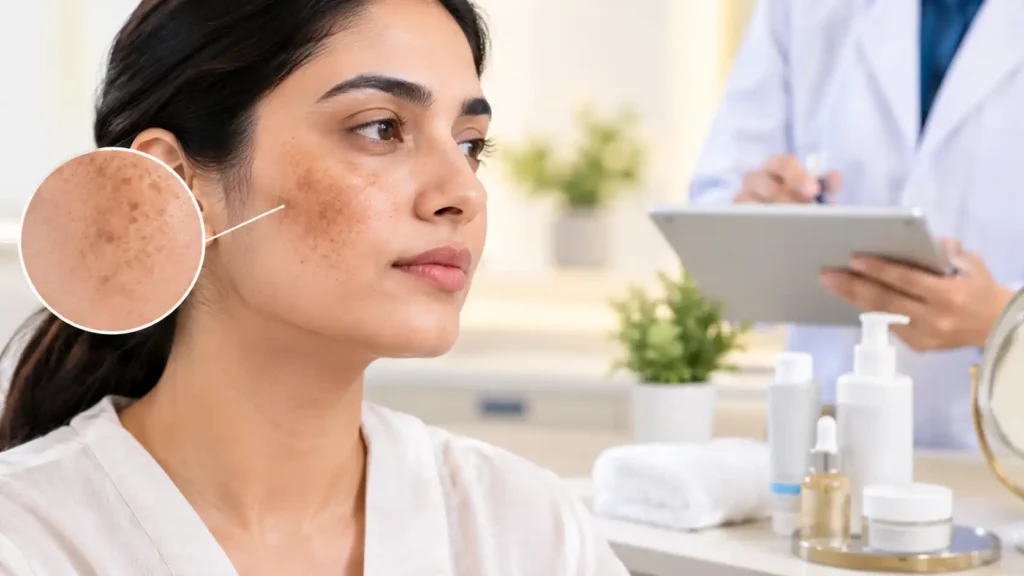
Melasma produces symmetrical brown or grey-brown patches on the cheeks, forehead, upper lip, nose bridge and jawline. Overactive melanocytes produce this pigment. In melasma, these cells stay “switched on” because of triggers that keep firing, which is why it differs from a freckle or a post-acne mark.
The Three Melasma Types by Depth
A dermatologist classifies depth with a Wood’s lamp examination during a medical skin consultation. Depth decides the plan and the expected result.
| Melasma Type | Pigment Location | Wood’s Lamp Sign | Response to Treatment |
| Epidermal | Upper skin layer | Patch looks sharper and darker | Best response, often visible change in 6 to 8 weeks |
| Dermal | Deeper skin layer | No enhancement | Slow response, needs combination therapy |
| Mixed | Both layers | Partial enhancement | Most common in Pakistani patients, moderate response |
Why Melasma Is Common in Pakistani Skin
Fitzpatrick skin types III to V have more active melanocytes. These skin types tan easily and form pigment quickly after heat, friction or inflammation. Women aged 20 to 45 form the largest patient group, and pregnancy, contraceptive pills and thyroid imbalance raise the risk further.
Why Melasma Keeps Coming Back in Karachi
Relapse has identifiable causes. Our clinic sees the same six patterns repeatedly.
1. Year-Round High UV Exposure
Karachi’s UV index regularly reaches 10 to 12 between March and October. Short exposures on a rickshaw ride, a school run or a rooftop count. UVA passes through car windows and cloud cover, so indoor-looking days still darken patches.
2. Heat and Visible Light
Heat alone activates melanocytes, even without direct sun. Kitchen stoves, tandoor heat, hot showers and 38°C summer afternoons all feed pigment. Visible light from the sun also darkens melasma in brown skin, and standard chemical sunscreens do not block it well. Tinted sunscreens with iron oxides do.
3. Hormonal Triggers
Pregnancy, oral contraceptives, hormonal IUDs and PCOS keep melasma active. If the trigger continues, the pigment returns after treatment stops.
4. Stopping Treatment Once Patches Fade
Patients often stop the cream the week their skin looks clear. The pigment cells remain overactive, so patches return within 2 to 4 months.
5. Aggressive Home Remedies and Unregulated Creams
Lemon juice, bleaching creams and imported “formula creams” sold in local markets often contain strong steroids or mercury. Steroid creams thin the skin, cause redness and trigger rebound pigmentation once stopped. Long-term hydroquinone misuse can cause ochronosis, a blue-grey pigment that is very hard to reverse.
6. Wrong Laser Settings
High-energy laser on brown skin causes post-inflammatory hyperpigmentation (PIH), which layers new pigment on top of melasma. Laser is useful only at low, controlled energy settings chosen for your skin type.
Karachi Melasma Trigger Matrix
This matrix links local conditions to relapse risk and the control step for each.
| Local Factor | Season or Setting | Relapse Risk | Control Step |
| UV index 10 to 12 | March to October | Very high | SPF 50 tinted sunscreen, reapply every 2 to 3 hours |
| Humidity 70 to 85% | July to September | High (sunscreen slides off) | Gel or fluid sunscreen, powder SPF top-ups |
| Heat above 35°C | May to August | High | Avoid kitchen heat, cool water face washes |
| Power outages without AC | Summer evenings | Moderate | Cooling mists, stay in shaded rooms |
| Wedding season facials | November to February | Moderate | Avoid bleach and harsh scrubs before events |
| Hormonal therapy | Any time | High | Discuss alternatives with your gynaecologist |
Clinical Melasma Treatments Ranked by Evidence
No single treatment cures melasma. Dermatologists combine topical, oral and procedural options, then taper to maintenance.
Topical Therapy: The Foundation
- Triple combination cream: hydroquinone, tretinoin and a mild steroid, used for a limited supervised period only.
- Non-hydroquinone agents: azelaic acid, kojic acid, tranexamic acid serum, niacinamide, cysteamine and thiamidol for maintenance.
- Retinoids: increase cell turnover and help pigment shed.
Oral Tranexamic Acid
Oral tranexamic acid reduces the signals that switch on melanocytes. Published studies report meaningful improvement in most patients within 8 to 12 weeks. It is a prescription medicine and needs screening for clotting history, smoking and hormonal pill use, so it must be prescribed after a dermatologist’s assessment.
Chemical Peels
Glycolic, lactic, mandelic and modified Jessner’s peels remove pigmented surface cells. Superficial peels suit most melasma patients because deeper peels raise PIH risk in brown skin. Sessions run every 2 to 4 weeks.
Low-Fluence Laser Toning
Q-switched Nd:YAG at low energy breaks down pigment gradually with minimal heat. Our laser pigmentation treatment uses conservative settings and test spots for Fitzpatrick IV to V skin.
Microneedling With Tranexamic Acid
Microneedling creates micro-channels that let tranexamic acid penetrate deeper. It helps mixed melasma that has not responded to creams alone.
Supportive Brightening Treatments
Glutathione therapy and medical brightening facials support an overall even tone but do not replace a melasma protocol.
Treatment-to-Melasma Matching Table
| Patient Profile | Recommended Plan | Expected Timeline |
| Epidermal melasma, first episode | Topical therapy + sunscreen + superficial peels | Visible change in 6 to 8 weeks |
| Mixed melasma, recurring | Oral TXA + topicals + laser toning | 3 to 6 months |
| Dermal melasma | Combination therapy + microneedling with TXA | 6 months or longer, partial clearance |
| Pregnant or breastfeeding | Azelaic acid + physical sunscreen only | Delay active treatment |
| Steroid cream damage | Stop steroid under supervision, barrier repair first | 4 to 8 weeks before active treatment |
Melasma Treatment Cost in Karachi
Prices depend on depth, area and number of sessions. The ranges below are indicative Karachi market figures for 2026. Your exact quote comes after assessment.
| Treatment | Indicative Cost per Session (PKR) | Typical Sessions |
| Dermatologist consultation + Wood’s lamp | Free to 3,000 | 1, then follow-ups |
| Superficial chemical peel | 6,000 to 15,000 | 4 to 6 |
| Low-fluence laser toning | 10,000 to 25,000 | 6 to 10 |
| Microneedling with TXA | 12,000 to 25,000 | 3 to 6 |
| Prescription topicals and oral TXA | 3,000 to 8,000 per month | 3 to 6 months |
Total Cost of Ownership: Clinical Plan vs Repeated Self-Treatment
| Approach | 12-Month Spend (PKR) | Result |
| Market creams and parlour bleach | 30,000 to 60,000 | Temporary lightening, high rebound and skin damage risk |
| Supervised clinical plan + maintenance | 80,000 to 180,000 | Controlled patches, lower relapse rate |
| Clinical plan stopped at clearance | 60,000 to 120,000 | Relapse in 2 to 4 months, repeat spend |
The supervised plan costs more in year one but lowers spend in year two because maintenance needs fewer sessions.
The Maintenance Plan That Stops Relapse
Maintenance is the step most patients skip. Our dermatologists taper treatment in stages.
Daily Maintenance Checklist
- Apply SPF 50 tinted sunscreen every morning, including at home.
- Reapply every 2 to 3 hours outdoors or after sweating.
- Wear a wide-brim hat or dupatta cover during peak sun (11am to 4pm).
- Use a non-hydroquinone brightening serum at night.
- Wash your face with lukewarm water, not hot water.
- Avoid facial bleach, waxing on patches and harsh scrubs.
Clinic Maintenance Schedule
- One superficial peel or laser toning session every 6 to 8 weeks for the first year.
- Dermatologist review every 3 months.
- Pre-summer review in March to adjust sunscreen and topicals.
When to See a Dermatologist
Book a consultation if patches spread, darken after treatment, appear after starting a hormonal pill, or if a market cream has left your skin red and thin. Patients with acne and sensitivity alongside melasma may need our acne, rosacea and sensitive skin care protocol first.
Frequently Asked Questions
Can melasma be cured permanently?
No. Melasma can be cleared and controlled, but the tendency stays. Maintenance keeps it from returning.
How long does melasma treatment take to show results?
Epidermal melasma usually lightens in 6 to 8 weeks. Mixed and dermal melasma need 3 to 6 months.
Is laser safe for melasma on brown skin?
Low-fluence laser toning is safe when a trained clinician uses conservative settings. High-energy laser can worsen melasma.
Does melasma go away after pregnancy?
Some pregnancy melasma fades within a year after delivery. Many cases persist and need treatment once breastfeeding ends.
Which sunscreen is best for melasma in Karachi?
A broad-spectrum SPF 50 tinted sunscreen with iron oxides protects against UV and visible light. Gel textures suit humid months.
Take Control of Melasma With a Dermatologist-Led Plan
LifeStyle Clinic in North Nazimabad, Karachi, offers Wood’s lamp assessment, prescription therapy and low-energy procedures planned for Pakistani skin types. Explore our dedicated melasma treatment page or book an appointment for a free consultation. Call 0312 0233316, Monday to Saturday, 11am to 9pm.