
PRP for hair costs between PKR 8,000 and PKR 35,000 per session in Karachi, a spread of more than four times for a procedure with the same name. Some of that gap reflects real differences in preparation and who performs the injection. Some of it does not. This guide prices the treatment, sets out what the published evidence actually supports, tells you which blood tests to run before you spend anything, and compares a year of PRP against the alternatives in rupees.
PRP Hair Treatment Prices in Karachi 2026
| Tier | Per session (PKR) | What it usually indicates |
| Low | 5,000 to 8,000 | Manual tube preparation, single spin, high volume clinic |
| Low to mid | 8,300 to 12,000 | Established clinic, standardised protocol |
| Typical | 15,000 to 20,000 | Closed PRP kit, doctor administered, trichoscopy assessment included |
| High | 20,000 to 35,000 | Advanced protocol, larger plasma volume, dermatologist led |
Karachi consistently prices at or above the national average for PRP. Note that marketplace listings often show figures as low as PKR 500 to 3,000, which are consultation fees, not treatment prices. Several price guides have copied those numbers across as if they were procedure costs. They are not.
Session Packages: The Table Nobody in Karachi Publishes
Almost no Karachi clinic publishes a package price for a full PRP course, which makes budgeting guesswork. Here is a realistic matrix at typical city pricing.
| Course | At PKR 12,000 per session | At PKR 18,000 per session | Suits |
| 3 sessions, 4 weeks apart | 36,000 | 54,000 | Early thinning, telogen effluvium recovery |
| 4 sessions, 4 weeks apart | 48,000 | 72,000 | Most first courses |
| 6 sessions, 4 to 6 weeks apart | 72,000 | 108,000 | Established androgenetic alopecia |
| Maintenance, 2 to 3 sessions a year | 24,000 to 36,000 | 36,000 to 54,000 | Ongoing after the initial course |
Ask three questions before paying for a package: is the initial consultation and trichoscopy included, are blood tests included or extra, and does the package have an expiry date. Our PRP hair restoration programme sets session count and interval after assessment rather than selling a fixed block up front.
Run These Blood Tests Before You Spend Anything
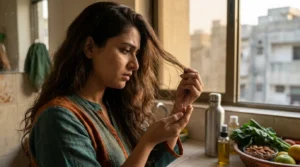
This is the single most useful section on this page, and no Karachi PRP page includes it. Hair shedding in Pakistan is frequently driven by correctable deficiencies. National survey data puts vitamin D deficiency in women of reproductive age near 80 percent and anaemia above 40 percent, with iron deficiency around a third. A Karachi population study of asymptomatic adults found around 84 percent below the sufficiency threshold for vitamin D. Paying PKR 72,000 for PRP while ferritin sits at 8 is spending money on the wrong problem.
| Test | Why it matters | What to do with the result |
| Full blood count | Detects anaemia | Treat before or alongside PRP |
| Serum ferritin and iron saturation | Low iron stores are a leading cause of diffuse shedding in women | Correct with supervised supplementation |
| TSH | Thyroid dysfunction causes diffuse hair loss | Treat the thyroid first |
| Vitamin D | Widespread deficiency in Pakistan | Correct alongside treatment |
| Trichoscopy and hair pull test | Distinguishes androgenetic alopecia from telogen effluvium and scarring alopecia | Determines whether PRP is even the right treatment |
Start with a medical skin consultation that includes scalp examination, not with a package purchase.
What the Evidence Actually Supports
PRP concentrates platelets from your own blood, typically to several times baseline, and delivers growth factors including VEGF, IGF-1, EGF, PDGF and TGF beta into the scalp. These act on the dermal papilla and bulge stem cells, promoting anagen induction and improved follicular vascularity.
A meta analysis of randomised controlled trials in androgenetic alopecia found a pooled improvement of approximately 27.5 hairs per square centimetre against control. That is a real, measurable benefit. The same analysis graded the overall certainty of evidence as low, citing small sample sizes, high heterogeneity between studies and non standardised protocols. Both halves of that sentence should be stated by any clinic selling you PRP. It works for many patients, and the evidence base is not as robust as the marketing suggests.
The single spin versus double spin claim
Clinics market double spin preparation as inherently superior. A published comparison found single spin produced a higher platelet fold increase, while double spin produced a greater increase in follicular units, with broadly comparable clinical outcomes. Preparation method is not the differentiator it is sold as. Consistency, plasma volume, injection depth and technique matter more.
Realistic Results Timeline
| Timepoint | What happens | What to do |
| Week 1 to 3 | Possible mild shedding. This is common and expected as follicles reset the cycle | Do not panic and do not stop |
| Month 1 to 2 | Reduced daily shedding for most responders | Continue the schedule |
| Month 3 to 4 | First visible change in density and hair calibre | Photograph and compare against baseline |
| Month 6 | Peak result from the initial course | Decide on maintenance |
| Month 9 to 12 | Effect declines without maintenance | Two to three maintenance sessions a year |
Set a decision rule before you start. If there is no measurable change in density on standardised photographs by month four of a properly delivered course, stop paying and reassess the diagnosis. No Karachi clinic will hand you that rule, and it is the one that protects your money.
Who Is Not a Candidate
- Completely bald areas with no visible follicles. PRP acts on miniaturised follicles, not absent ones. It cannot regrow hair where the follicle is gone.
- Scarring alopecias, where the follicle has been replaced by fibrous tissue.
- Low platelet counts, platelet function disorders, or active anticoagulant therapy without medical clearance.
- Active scalp infection, folliculitis or an inflamed dermatitis.
- Active malignancy or uncontrolled systemic disease.
- Untreated iron deficiency or thyroid disease, until corrected.
PRP Against the Alternatives, in Rupees
| Treatment | Karachi price | Evidence position | Notes |
| PRP | PKR 8,000 to 35,000 per session | Multiple randomised trials, meta analysis positive, certainty graded low | Autologous, recurring, best studied of the injectables |
| Scalp mesotherapy | PKR 7,000 to 25,000 per session | Limited controlled data | Often combined with PRP |
| Growth factor concentrate | PKR 15,000 to 30,000 per session | Emerging comparative data against PRP | Karachi specific pricing rarely published |
| Exosome hair therapy | PKR 40,000 to 150,000 per session | Newer modality, published evidence limited | Discuss expected benefit and cost carefully before committing |
| Stem cell hair therapy | Karachi pricing rarely published | Newer modality, evidence still developing | Ask exactly what is being administered |
| Topical minoxidil 5 percent | Approximately PKR 800 to 900 per month | Well established | Roughly PKR 10,000 a year. Works alongside PRP |
| Hair transplant | PKR 30 to 70 per graft | Established surgical option | 2,500 to 3,000 grafts costs approximately PKR 90,000 to 180,000 |
The comparison that matters
Six PRP sessions at PKR 15,000 is PKR 90,000. That is roughly what a 2,000 to 3,000 graft transplant costs in Karachi. The critical difference is that PRP recurs and a transplant does not. Over five years, PRP with maintenance runs PKR 200,000 to 300,000. That does not make PRP the wrong choice. PRP treats miniaturising follicles across the whole scalp and can preserve what you still have, which a transplant cannot do. A transplant relocates existing follicles into bald zones and does nothing for the hair around them. Most patients with progressive loss end up needing both, and the sequence matters. Discuss it as part of a full hair and scalp assessment.
What a Session Actually Involves
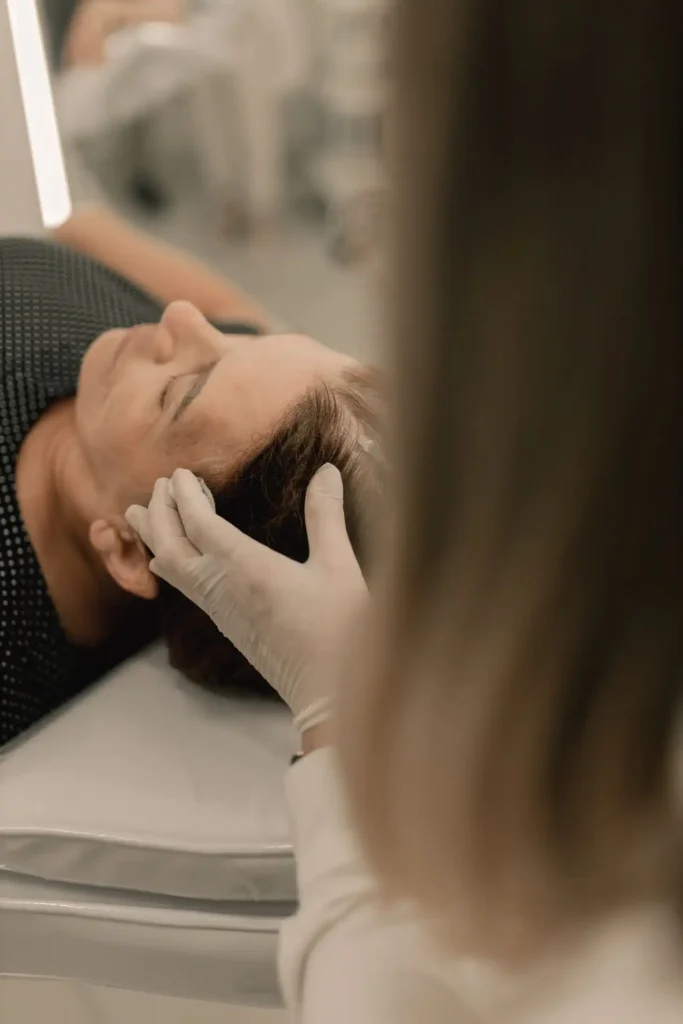
- Blood draw. Around 10 to 20 ml, taken as for a routine test.
- Centrifugation. Separates platelet rich plasma from red cells and platelet poor plasma.
- Numbing. Topical anaesthetic applied 45 to 60 minutes before injection substantially reduces discomfort. Ask whether it is included or billed.
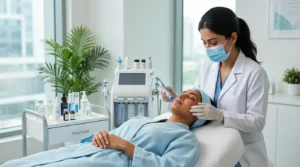
- Injection. Intradermal microinjections across the affected scalp, typically 20 to 30 minutes.
- Aftercare. No hair wash for 24 hours. No swimming, sauna or heavy exercise for 48 hours. Avoid chemical treatments and colour for a week.
- Downtime. Return to work the same day. Scalp tenderness and mild swelling for 24 to 48 hours are normal.
Combining PRP With Medical Treatment
The best studied PRP protocols were run alongside topical minoxidil, not instead of it. For androgenetic alopecia, the combination of PRP and appropriate medical therapy consistently outperforms either alone. If a clinic offers you PRP without discussing medical management at all, they are selling a procedure rather than treating a condition. Ask what the full plan is, including what you use at home between sessions.
Local Practicalities in Karachi
- Fasting and Ramadan. A blood draw while fasting is tolerated by most people but can cause light headedness. Schedule after iftar or outside Ramadan where possible.
- Humidity and the no wash window. August humidity near 72 percent makes the 24 hour no wash rule uncomfortable. Book morning appointments and plan a lighter day.
- Water quality. Karachi water hardness and salinity vary enormously by district. Hard water damages the hair fibre and irritates the scalp. It does not cause follicular loss, and it should not be used to explain away genuine thinning.
- Seasonal shedding. Increased shedding after monsoon is commonly reported. Photograph your baseline so you can distinguish a seasonal fluctuation from real progression.
What to Photograph and Measure Before Session One
PRP produces gradual change, and gradual change is exactly what human memory is worst at judging. Without a baseline you will either abandon a working treatment or keep paying for one that is not working. Set this up before you spend anything.
| Baseline item | How to capture it | Why it matters |
| Parting width photograph | Overhead, natural daylight, hair parted the same way, same distance | The most sensitive early indicator of density change |
| Crown photograph | From above and slightly behind, dry hair, no product | Crown loss is hard to self assess in a mirror |
| Hairline photograph | Front on, hair pushed back, forehead fully visible | Documents recession |
| Daily shed count | Collect and count for three consecutive days | Distinguishes normal 50 to 100 from genuine excess |
| Trichoscopy | Performed at the clinic | Measures follicular miniaturisation objectively |
| Blood results | Full blood count, ferritin, TSH, vitamin D | Identifies correctable causes before you spend on procedures |
| Norwood or Ludwig stage | Assigned at consultation | Sets a realistic expectation of what PRP can achieve at your stage |
Repeat the photographs at month three and month six under identical conditions. Different lighting or a different parting will show you a change that is not real, in either direction.
PRP Alongside a Hair Transplant
These are complementary rather than competing, and the sequencing matters more than most Karachi clinics explain.
- Before a transplant. PRP improves scalp condition and can strengthen existing miniaturising follicles in the recipient area, so there is less native hair to lose.
- At the time of surgery. Some surgeons use PRP on the grafts or the recipient site. Practice varies. Ask what your surgeon does and why.
- After a transplant. PRP is commonly used from a few weeks post operatively to support graft survival and reduce post surgical shock loss. Follow your surgeon’s timing, not a clinic’s package schedule.
- The point most patients miss. A transplant relocates follicles. It does nothing for the native hair around the grafts, which continues to miniaturise. Without ongoing PRP or medical therapy, you get a good result that thins around it within a few years and often need a second procedure.
Aftercare and the First Week
| Timeframe | What to do | What to avoid |
| First 24 hours | Leave the scalp alone. Sleep on a clean pillowcase | No hair wash, no products, no hats or helmets pressing on the scalp |
| 24 to 48 hours | Wash gently with a mild cleanser and lukewarm water | No swimming, sauna, steam or heavy exercise. Avoid heavy sweating |
| Days 3 to 7 | Return to normal washing | No colouring, chemical straightening, keratin treatments or bleaching |
| Week 1 to 3 | Expect a mild shedding phase. Continue as planned | Do not conclude the treatment failed and stop |
| Ongoing | Continue any prescribed topical or oral therapy | Do not skip sessions or stretch intervals to save money. The schedule is the treatment |
Mild scalp tenderness, a tight feeling and small pinprick marks for 24 to 48 hours are expected. Spreading redness, pus, fever or severe pain are not, and should be reviewed the same day.
Questions to Ask Before Buying a Package
- What is my diagnosis, and how was it reached?
- Which blood tests should I run first, and are they included?
- Is trichoscopy included, and will baseline photographs be taken?
- How many sessions, at what interval, and what is the total cost?
- How much whole blood is drawn and what plasma volume is injected?
- Is topical anaesthetic included, and how long before the injection is it applied?
- Who performs the injection?
- What is the maintenance schedule and its annual cost?
- At what point would you advise me to stop if it is not working?
- What is the package validity, and what happens to unused sessions?
That last question about stopping is the one that separates a clinic treating a condition from a clinic selling a package. A practitioner who has a clear answer to it is worth paying more for.
Frequently Asked Questions
How many PRP sessions do I need?
Usually three to six initially at four to six week intervals, followed by two to three maintenance sessions a year.
Is PRP permanent?
No. It slows and partially reverses miniaturisation while maintained. Effect declines without maintenance.
Why am I shedding more after my first session?
Mild shedding in the first three weeks is common as follicles re-enter the growth phase. It is not treatment failure.
Does PRP work on bald patches?
No. Where follicles are absent or scarred, there is nothing for PRP to act on.
Is PRP painful?
The scalp is sensitive. Topical anaesthetic applied 45 to 60 minutes beforehand makes it well tolerated.
Can PRP replace a transplant?
No. They do different jobs. PRP preserves and thickens existing follicles. A transplant relocates them.
Is PRP permissible in Islam?
PRP uses your own blood, processed and returned to your own body. Many patients and scholars consider this materially different from receiving blood from another person. Consult your own religious advisor for a ruling.
Get the Diagnosis Before You Buy the Package
Lifestyle Clinic assesses scalp pattern, runs the relevant blood work and sets a realistic session count with a photographic baseline, so you can measure whether you are getting value. Book a free consultation at the North Nazimabad clinic in Karachi.